


 Manish Kulkarni
  30.12.2025
Cancelling a visa in the UAE is one of those things that looks easy from a distance but is really stressful when you have to do it. Whether you’re leaving the country, changing jobs, switching sponsorship, or closing a company, the cancellation must be done correctly or your record stays active — and that affects travel, new visas, and even basic government services.
The rules for visa cancellation are clear, but they differ slightly between MOHRE, GDRFA Dubai, and ICP in the other emirates, which is why many people get confused about where to start and who should submit the request. There are different steps that employers, donors, dependents, and investors need to take. If you miss even one approval, the whole process can be held up.
This guide explains how the system actually works, what documents matter, and how to avoid the mistakes that create fines or blocks later.
What Is Visa Cancellation and Why It Matters
The official step that takes away your residency status in the UAE is to cancel your visa. Until it’s cancelled, the government still considers you sponsored by your employer, your family member, or your own company. That’s why this step matters so much — it closes your existing file so you can leave the UAE, switch jobs, apply for a new visa, or move to a different sponsorship without any conflict in the records.
Most problems people face during job changes or exits come from a visa that was never cancelled properly. A residence file that remains active can block new applications, trigger overstay fines, or cause issues at airport immigration. In some cases, people only discover the problem when a new employer tries to apply for a work permit and the system refuses it because the old visa is still open.
The cancellation itself is straightforward once you know who must initiate it. Employers cancel employee visas, sponsors cancel dependent visas, and business owners cancel investor or partner visas. The goal of all of them is the same: to clear the record so that an old, unresolved file doesn't get in the way of the next part of your life or job.
MOHRE Visa Cancellation: Rules and Employer Responsibilities
When a worker leaves a job, MOHRE visa cancellation doesn’t start with the employee walking into an office. It starts with the company. The employer has to close the work permit and labour file before immigration will touch the residency visa. During this stage, MOHRE looks at basic things: is there a pending salary, unused leave, or an open complaint in the system. If something is still active, they normally expect it to be settled first.
The company is also expected to tell the employee what is happening, collect company items (ID card, laptop, uniform, etc.), and prepare the final settlement according to the contract or agreed terms.
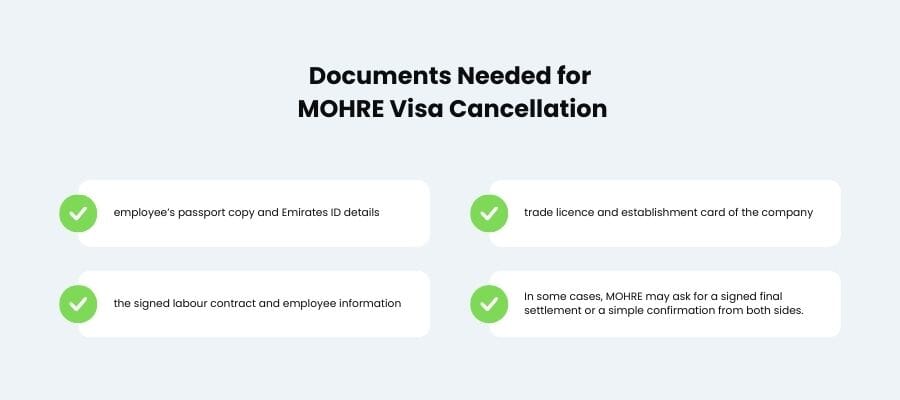
Documents Needed for MOHRE Visa Cancellation
Usually, the employer submits:
- employee’s passport copy and Emirates ID details
- trade licence and establishment card of the company
- the signed labour contract and employee informationIn some cases, MOHRE may ask for a signed final settlement or a simple confirmation from both sides.
Labour Card, Contract & Clearance
The labour card is cancelled first, since it shows the worker as active. MOHRE then checks the contract data and confirms that the employer requested cancellation correctly. Once MOHRE clearance is issued, the company can move on to cancelling the residency visa with GDRFA or ICP.
How to Cancel Visa in the UAE: Step-by-Step Guide
When people ask how to cancel a visa in the UAE, they’re usually talking about one simple goal: close the current residency file without leaving loose ends in MOHRE or immigration. The steps are clear, but each role in the process is different for employees, dependents, and investors.
Initiating the Cancellation
The cancellation of visa always starts with the sponsor, not with the person holding the visa.In practice that means:
- employer for an employee visa
- family sponsor for dependents
- company owner or partner for investor visas
Before pressing any button, the sponsor should check: MOHRE status (for workers), salary and end-of-service, and whether the person is still in the country. Most “stuck” visa cancellation cases come from starting the process while one of these is still open.
Submitting Documents to GDRFA or ICP
After the sponsor is ready, the request moves to immigration: GDRFA in Dubai, ICP for the other emirates. They submit the passport details, Emirates ID data, and the signed visa cancellation form. Immigration then checks if the sponsor is authorised and whether the file is clean—no active work permit, no unresolved entry record. If anything looks inconsistent, the officer asks for clarification instead of silently rejecting it.
Receiving the Visa Cancellation Letter
Immigration will send you a letter or an electronic confirmation after they approve your visa cancellation. This paper shows when the residency was cancelled and is typically requested by new companies, banks, or future applications. It's your confirmation that the last visa was closed appropriately in the system, so save a copy.

Want to learn more about UAE business setup services?
Visa Cancellation Fee and Government Charges in the UAE
When you hear about a visa cancellation fee, it usually means two things: the fixed charge immigration takes for closing the visa, and any extra fines attached to that file. The basic cancellation fee itself is small and doesn’t change much between an employee, dependent, or investor visa. If you cancel through a typing center, they add their own service fee on top for filling and submitting the form.
The amounts only start growing when something is late. An expired visa, an unused entry permit that was never cancelled, or days spent in the UAE after the grace period can all add to what you pay. Those are overstay fines, not the core UAE visa cancellation fee, but they must be cleared at the same time.
In most setups, employers pay for employee cancellations, while family sponsors or investors pay for their own cases. Immigration won’t complete the cancellation until all government amounts linked to that visa are fully settled.
How to Check Visa Cancellation Status in the UAE
After a sponsor files the request, you shouldn’t just assume the visa is gone from the system. You need to actually see what immigration shows under your name. The way you check depends on where the visa was issued, which is why people often search how to check visa cancellation status in UAE and get two different answers: ICP for most emirates and GDRFA for Dubai.

Checking Through ICP
For Abu Dhabi and the other non-Dubai emirates, you use the ICP platform. You enter your passport details or Emirates ID number, pick your nationality, and submit the enquiry. If the cancellation is done, the visa will show as cancelled or simply won’t appear as active anymore. If it still looks valid, it usually means the request is still pending or hasn’t been processed correctly.
Checking Through GDRFA Dubai
Dubai residency visas are checked through GDRFA. You use your passport number or visa file number and run a quick status check. A cancelled visa will show as closed or inactive. If it still shows up as current, the employer or sponsor may need to follow up with GDRFA to finish the process.
How to Check if My Visa Is Cancelled in the UAE from Abroad
You don’t have to be in the UAE to do this. As long as you remember your visa or passport details, you can use the same ICP or GDRFA tools from overseas and see whether the visa is still active or already cancelled.
Visa Cancellation Process in Dubai vs Other Emirates
The stages for cancelling seem the same in the UAE, but the authority in charge of them is different, which makes the process feel different. Dubai cancellations run through GDRFA, while Abu Dhabi and the other emirates use ICP. Both close the visa in the immigration system, but their forms, queues, and wording aren’t identical.
In Dubai, sponsors usually finish the process faster because GDRFA takes care of most of the steps in one spot. The system immediately shows whether the file is clear or if something—an old entry, a wrong passport number, or a missing MOHRE approval—needs attention.
Outside Dubai, ICP manages everything. The process is still straightforward, but the platform sometimes asks for extra confirmations, and sponsors may need to recheck data before the cancellation goes through.
The main rule is always the same: MOHRE is in charge of the work permit and immigration is in charge of the residency. Both must be approved before the visa can be publicly cancelled.
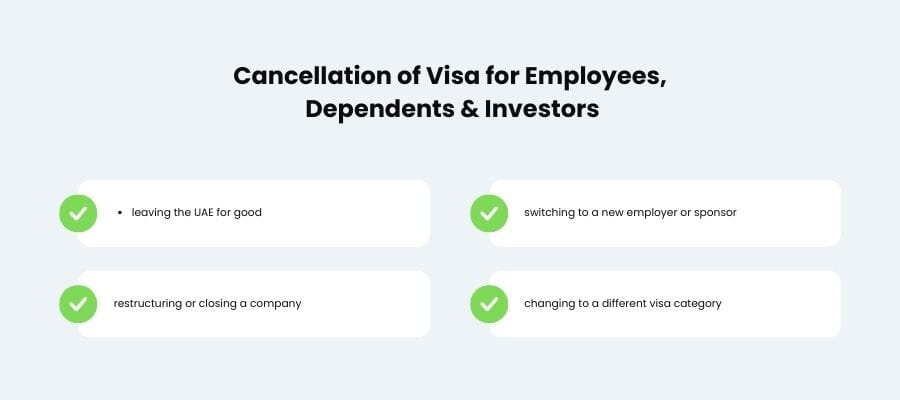
Cancellation of Visa for Employees, Dependents & Investors
Visa cancellation follows the same idea for everyone, but the person who initiates it — and the steps involved — depend on the visa type. Employees, dependents, and investors each go through a slightly different path because their sponsorship responsibilities aren’t the same.
For employees, the employer starts the process. MOHRE must close the labour file first, then GDRFA or ICP cancels the residency. The employee can’t cancel their own visa unless the employer cooperates, because the company is the legal sponsor. Most delays happen when salary, leave balance, or an old complaint is still open in the system.
For dependents, the family sponsor handles everything. Parents cancel children’s visas, spouses cancel each other’s visas, and the process is usually quick because there’s no labour step involved. Immigration only checks that the sponsor still has a valid visa and that the dependent has no overstay.
For investors and partners, the cancellation goes through immigration and the licensing authority. If the company is still active, the partner’s shares or licence role must be updated before immigration will close the visa.
Common reasons for cancellations across all types include:
- leaving the UAE for good
- switching to a new employer or sponsor
- restructuring or closing a company
- changing to a different visa category
Each group follows its own checklist, but the goal is identical: clear the old residency so the next visa or exit from the UAE isn’t blocked by an active file.
How Consulting.ae Helps With Visa Cancellation in the UAE
When people start the visa cancellation process, the same problems appear again and again — unclear instructions, missing approvals, or confusion about which authority handles which part. Consulting.ae steps in to remove that guesswork. First, we look at your file to see what kind of cancelling you need. If there are any problems, we let you know so that the request can move forward.
Once the situation is clear, we prepare the forms, organise the documents, and handle the communication with MOHRE, GDRFA Dubai, or ICP. If you’re trying to understand how to cancel visa in UAE while already outside the country, we explain what is possible and what isn’t, based on the rules for your visa type.
As each step is taken, you are kept up to date, so you never have to wonder what happened next. The goal is easy: be sure to properly close the visa so you don't get fined and keep your record clean for future applications.
You can check it through ICP or GDRFA by entering your passport details or Emirates ID number. The system shows whether the visa cancellation is approved, pending, or rejected. If the status doesn’t move, contact your sponsor or a service centre to confirm what’s missing.
How long does visa cancellation take?
After all the paperwork is in order, most cancellations are done in a few days. Missing signatures or unfinished work processes are the most common causes of delays. If your file is urgent, you can ask your sponsor to follow up directly with MOHRE or GDRFA.
Can I cancel my visa without employer approval?
In most cases, no — the sponsor must submit the request. If the sponsor refuses, you may file a labour complaint so MOHRE can review the situation and decide what action is allowed. Do not leave it unresolved, or the cancellation will not proceed.
What happens if I overstay after cancellation?
Overstay fines begin immediately once the grace period ends. The amount increases daily until you exit or change status, and immigration may block new applications if the fines remain unpaid.
How to get a visa cancellation letter?

