

 Calen Voss
  13.01.2026
Opening a neighborhood grocery sounds simple until you try doing it in Dubai. Shelves, suppliers, a cash counter — easy. Rules, licenses, approvals — that’s where most people hesitate. If you’re planning to start a grocery store in Dubai, this guide is written for you, not for lawyers or corporate chains. It’s for expats with savings, families looking for steady income, first-time entrepreneurs, and anyone eyeing a small Baqala in a residential area and wondering where to begin.
Dubai welcomes retail, but it expects structure. Grocery businesses are regulated, locations matter, and food rules are taken seriously. The good news? Once you understand the system, it’s surprisingly logical. No guesswork, no hidden shortcuts, no myths.
This article walks you through what a grocery store really is in Dubai, who can open one, how licensing works, what it actually costs, and where people usually go wrong. Plain language, real numbers, and decisions explained the way you’d want them explained before committing your money.
What Is a Grocery Store (Baqala) in Dubai and How Does It Work?
A grocery store in Dubai is a licensed corner shop that runs on quick, repeat buys. People drop in for water, bread, milk, rice, snacks, cleaning basics, baby items, SIM top-ups, and the “I need it now” things nobody plans ahead for. You order stock, set prices, keep invoices, and sell all day. The twist is responsibility: the moment food is on your shelves, you’re expected to store it correctly, keep chilled items at safe temperatures, separate chemicals from food, and stay inspection-ready. You also need clear product labeling and a clean, documented supplier trail.
Most Baqalas don’t try to be massive. They stay small, sharp, and useful. The winning formula is simple: be close to homes, open when residents are actually around, and never run out of the basics.
Grocery Store vs Baqala: Are They the Same?
In everyday Dubai talk, yes. “Baqala” is the local word for a compact neighborhood grocery, and “grocery store” is the same thing said in international English. The difference is more about expectation than definition: Baqala usually signals a tight space with essentials, while “grocery store” can sound broader.
What matters legally isn’t the word on your sign — it’s what your licensed activity and approvals allow. If you’re figuring out how to open Baqala in Dubai, lock the correct activity first, then build your shelves around that allowed scope.
Why Start a Grocery Store in Dubai?
Dubai is built around daily convenience. People live in apartments, work long hours, and rarely want a long trip for small purchases. That habit alone explains why grocery stores stay busy even when everything else slows down. A Baqala doesn’t depend on trends, seasons, or advertising tricks. It depends on routine — and routine is something Dubai never runs out of.
Another reason is stability. Grocery spending doesn’t disappear when budgets tighten. People may delay upgrades or travel plans, but they still buy milk, water, rice, and detergent. If you’re looking for a business that feels grounded rather than speculative, this is one of the few retail models that keeps its feet on the ground in Dubai.
Demand for Grocery and Baqala Businesses in Residential Areas
Residential zones are where Baqalas earn their keep. Families, bachelors, delivery drivers, cleaners, and security staff all rely on nearby stores for fast purchases. Many buildings are designed with ground-floor retail specifically for this purpose. When a Baqala is missing, residents feel it immediately.
What makes demand reliable is frequency. Customers don’t come once a month — they come daily, sometimes twice a day. Small baskets add up fast. A single building can support steady turnover if the store is easy to access and stocked correctly. That’s why location matters more than branding or décor.
This demand also explains why authorities regulate grocery businesses closely. They know these shops serve entire communities. If you set it up properly, follow the rules, and choose the right spot, you’re not chasing customers. You’re simply stepping into a role the neighborhood already expects someone to fill.
Who Can Start a Grocery or Baqala Business in Dubai?
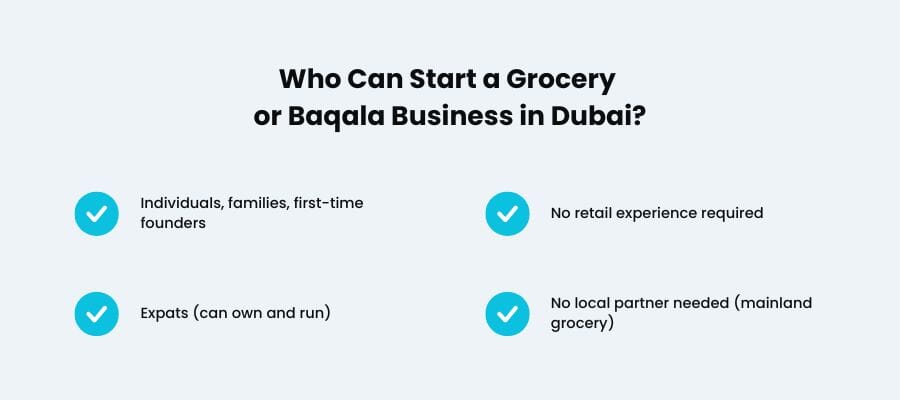
Grocery businesses in Dubai aren’t limited to “big traders.” Individuals, families, and first-time founders can apply, and expats can own and run a store as long as the setup is done correctly. For a typical mainland grocery activity, you generally don’t need a local partner, and nobody asks you to “prove” retail experience — but the paperwork and approvals must be clean.
There are a few fixed rules. You need to be 21+. You also need legal residency status; if you’re not already a UAE resident, the setup often includes arranging a residence visa through the company. Basic compliance checks are normal.
What really decides approval is whether your business looks real: an actual shop, a suitable location, Ejari in place, and a plan that fits food safety requirements. If you’re serious about how to start a grocery store in Dubai, compliance is the gate, not your passport.

Want to learn more about UAE business setup services?
How to Start a Grocery Store in Dubai Step by Step
Opening a grocery store here isn’t about racing through forms. It’s about doing things in the right order so approvals don’t bounce back later. Each step builds on the previous one, and skipping ahead usually costs more time than it saves.
Choosing the Business Activity for a Grocery Store
Everything starts with the activity you select. For a Baqala or neighborhood grocery, the activity must clearly cover grocery retail and daily consumer goods. This choice defines what you’re allowed to sell and what approvals you’ll need later. If the activity is too narrow, products get blocked. If it’s too broad, approvals slow down. Precision here matters more than people think.
Trade Name Reservation and Initial Approval
Next comes the trade name. It must follow local naming rules and match the business activity. Once reserved, you apply for initial approval from the Dubai Department of Economy & Tourism. This step confirms the government has no objection to you operating a grocery business in principle. No shop yet — just permission to move forward.
Selecting the Right Location and Ejari Registration
Location is non-negotiable. Grocery stores must operate from approved commercial premises, usually in residential or mixed-use buildings. After signing the lease, you register Ejari. Without Ejari, your license application stops immediately. This is where many first-timers get stuck by choosing the wrong unit.
Applying for a Grocery License in Dubai
With activity, name, and Ejari ready, you apply for the grocery license itself. This includes submitting documents, paying fees, and coordinating municipality approvals. Done correctly, this stage moves smoothly.
If you want this handled without back-and-forth or rejected submissions, Consulting.ae can manage the full setup — from activity selection to final license issuance — while you focus on preparing your store to open.
Grocery License Cost in Dubai: What to Expect
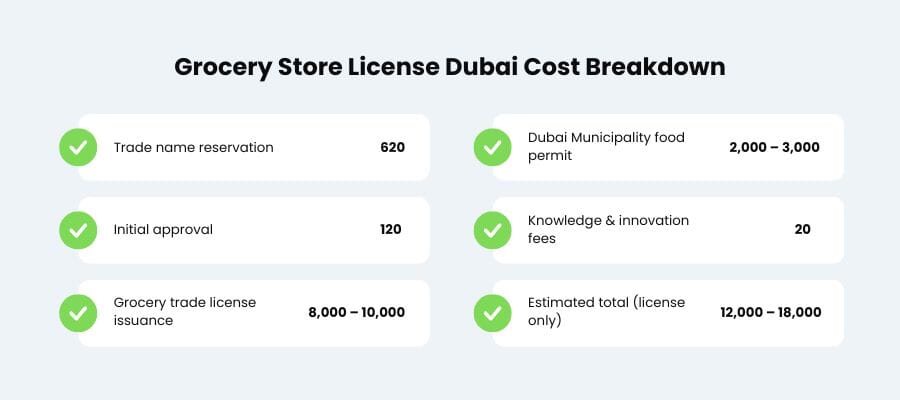
A grocery license in Dubai isn’t cheap, but it’s also not unpredictable. The cost sits in a defined range, and once you understand what you’re paying for, there are no nasty surprises hiding later. For most people planning how to open a grocery store in Dubai, the total licensing cost lands between AED 12,000 and AED 18,000, depending on location and approvals. This figure covers the legal right to operate — not the shop itself.
Grocery Store License Dubai Cost Breakdown
Here’s how the core costs usually stack up for a mainland grocery store:
|
Item |
Typical Cost (AED) |
|
Trade name reservation |
620 |
|
Initial approval |
120 |
|
Grocery trade license issuance |
8,000 – 10,000 |
|
Dubai Municipality food permit |
2,000 – 3,000 |
|
Knowledge & innovation fees |
20 |
|
Estimated total (license only) |
12,000 – 18,000 |
These fees are issued through the Dubai Department of Economy & Tourism and Dubai Municipality, and they must be paid before your store can legally open.
Additional Costs to Consider Before Opening
Licensing is only part of the budget. You’ll also need to plan for:
- Shop rent and Ejari (varies widely by area)
- Basic fit-out, shelves, and refrigeration
- Signage approval and exterior branding
- Initial inventory and supplier deposits
- Staff visas, if you won’t run the shop alone
Consulting.ae can help you figure out the full cost of getting a grocery store license by showing you both the required fees and the realistic startup costs based on where you want to open your store.
Mainland vs Free Zone: Where Should You Register a Grocery Store?
For a grocery store, registration isn’t a “business style” choice. It decides whether you can legally trade where your customers actually live.
Mainland Grocery Store Setup
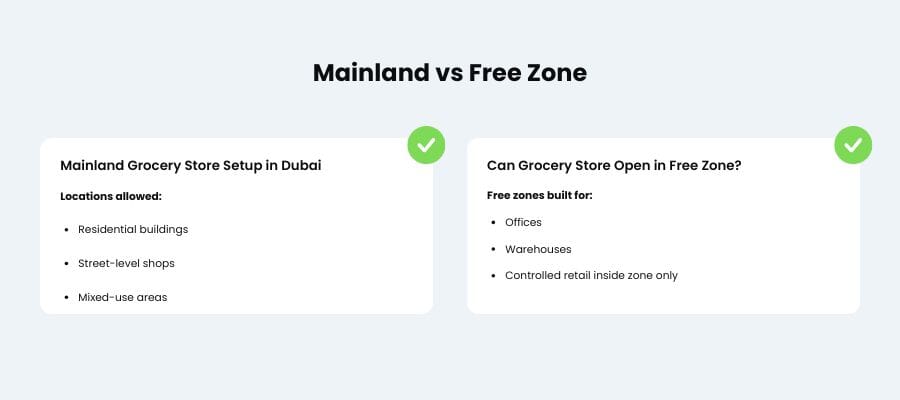
Mainland is the default for baqalas. It lets you open in residential buildings, street-level shops, and mixed-use areas with daily foot traffic. You can sell directly to the public without the awkward limits that come with zone-based activity. If you’re mapping out how to open a grocery store in Dubai, mainland registration usually matches the real-world grocery model: walk-ins, repeat buys, and a shop that belongs in the neighborhood.
Can a Grocery Store Be Opened in a Free Zone?
Usually, not as a normal Baqala. Free zones are built for offices, warehouses, and controlled retail inside the zone. Operating a neighborhood shop outside the zone can require extra licensing steps and may not be workable for a simple grocery concept. If your plan is how to start a grocery store in Dubai for residential customers, free zone setup is rarely the clean option.
Want to learn more about UAE business setup services?
Municipality Approvals, Food Safety, and Compliance
If you sell food in Dubai, you operate under supervision. That’s not drama — it’s simply how the city runs. A grocery store touches daily life, so the rules are enforced in a practical, hands-on way. You can have the perfect product mix and great foot traffic, but if your approvals and hygiene setup are sloppy, you’re building on sand.
Dubai Municipality Requirements for Grocery Stores
Before you open, Dubai Municipality needs to sign off on the premises. They check the space itself, not your business “idea.” Expect attention to storage areas, refrigeration, ventilation, waste handling, pest control, and whether food is kept away from chemicals and cleaning products. Layout matters. Cleanliness matters. Even small details, like where cartons are kept off the floor, can come up.
You typically submit tenancy details, shop information, and what you plan to sell. If the unit doesn’t fit the purpose, the answer is not “maybe later.” It’s “fix it first.” This is why location selection isn’t just about rent or visibility.
Food Safety and Hygiene Rules for Baqalas
After approval, the real work begins: staying compliant every day. Chilled products must remain chilled. Expiry dates must be monitored. Deliveries should come from traceable suppliers, with invoices kept. Shelves need routine cleaning. Floors, bins, and storage corners can’t be ignored because inspectors won’t ignore them.
Inspections can happen during normal business hours. They don’t need an appointment. If you’re learning how to open a grocery store in Dubai, treat food safety as part of operations, like pricing or inventory — not as a one-time hurdle. That mindset keeps your shop open, calm, and predictable.
Conclusion
A grocery store in Dubai succeeds when you treat it like a regulated business from day one, not a casual retail experiment. The paperwork isn’t there to “make life difficult” — it’s there because you’re selling items people eat, drink, and bring home to their kids. When your activity is chosen correctly, your premises are suitable, your Ejari is in place, and Dubai Municipality requirements are handled properly, the rest becomes routine: stock, sales, repetition.
If you want to start a grocery store in Dubai, don’t build the plan around hope. Build it around approvals, numbers, and a location that actually fits the grocery model. That approach saves you from sudden rejections, forced shop changes, and delays that quietly drain your budget.
Grocery stores work in Dubai for one simple reason: people buy essentials every day, even when they postpone everything else. Your job is to open legally, operate cleanly, and stay inspection-ready without panic.
If you’d rather not juggle licensing, submissions, and compliance alone, Consulting.ae can support the full setup — grocery registration, license application, municipality approvals, and the complete business launch process.
Is opening a grocery store profitable in Dubai?
Yes, it can be — but only when the shop sits where daily foot traffic is real. People searching how to start a grocery store in Dubai often expect high margins, but the model works on volume and repetition. Essentials sold every day are what keep the numbers healthy.
Do I need Dubai Municipality approval for a Baqala?
Yes, without exception. Dubai Municipality approval is required before a Baqala can operate, and it’s tied directly to the shop layout and storage setup. If you’re planning how to open baqala in dubai, this approval needs to be part of your plan from day one.
How long does it take to get a grocery license in Dubai?
In a clean setup, it usually takes 7 to 14 working days once Ejari, documents, and submissions are ready. Delays mostly come from unsuitable premises or incomplete files. Anyone serious about how to open a grocery store in Dubai should expect timelines to depend on preparation, not luck.
Can I sell all food products under a grocery license?
No. A standard grocery license allows packaged food and daily-use items only. Products like fresh meat or restricted categories require extra approvals, which is why the scope of a grocery license in Dubai matters more than branding.
Is VAT registration required for grocery stores in Dubai?

