


 Calen Voss
  13.01.2026
CSR rarely announces itself loudly when it’s done right. It works in the background, shaping how people experience your company over time. CSR answers the questions stakeholders don’t always ask directly but always care about. If you’re wondering what is CSR, it’s the difference between a business that reacts and one that anticipates. In the UAE’s structured yet dynamic business landscape, that difference can decide how far — and how smoothly — a company goes.
What Does CSR Stand For and What Is the CSR Meaning in Business?
CSR stands for corporate social responsibility, but in modern business it functions more like a system than a principle. Companies use it to decide what’s acceptable and what isn’t.
The general CSR meaning is responsibility beyond profit. CSR meaning in business focuses on how that responsibility is built into operations. Today, CSR is not treated as optional goodwill. It’s treated as a way to protect stability, reputation, and trust.
Modern corporate social responsibility shows how businesses handle stress. This practical concept of corporate social responsibility is in line with international guidelines like ISO 26000, which sees CSR as a way to act responsibly rather than as a way to sell products.
In situations of resource scarcity, personnel constraints, or emerging dangers, Corporate Social Responsibility (CSR) informs decision-making. Consequently, it is frequently integrated into policies, procedures, and management practices.
Most businesses apply CSR across areas like:
- energy use, emissions, and waste
- employee treatment and workplace safety
- ethical sourcing and partner selection
- governance and internal decision control
CSR works best when it fades into the background. When responsibility becomes part of how business is done — without explanation.
Why Is Corporate Social Responsibility Important for Companies?
CSR stands for corporate social responsibility, but it only makes sense when viewed through stakeholders. CSR meaning in business lies in how a company balances the interests of everyone it affects.
Workers want to be safe and treated fairly. Communities want people to respect them and help out. Partners want to be able to count on each other. Regulators want to see that people follow the rules. Instead of conflicting, CSR is the structure that keeps those standards in line.
If you're wondering what is CSR, consider coordination. Corporate social responsibility enables corporations to act in ways that do not cause tension between stakeholders. As businesses grow in size, coordination becomes increasingly important.
In the UAE, where companies do business with a lot of different suppliers, authorities, and foreign customers, CSR meaning has a direct impact on how relationships grow. Responsible behavior usually builds on itself over time.
CSR isn’t about pleasing everyone. It’s about understanding whose trust you depend on — and protecting it deliberately.
Why Is Corporate Social Responsibility Important for Companies?
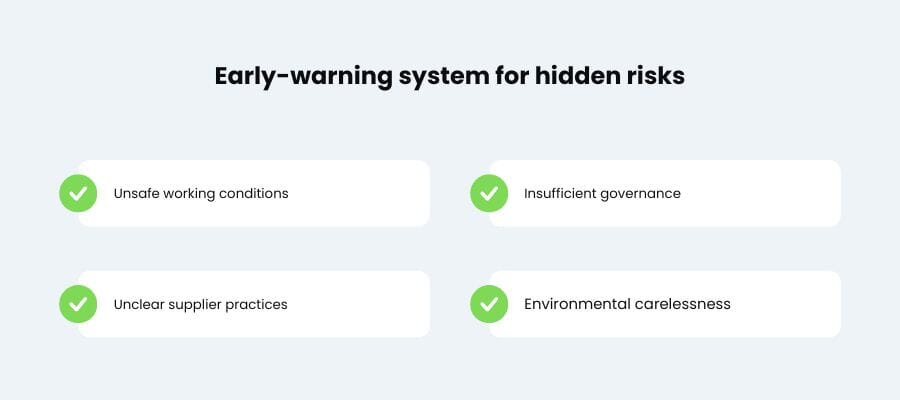
Corporate social responsibility is important because it helps companies avoid risks that don’t appear immediately on financial reports. Corporate social responsibility works as an early-warning system, highlighting weaknesses before they turn into public issues.
When you understand what CSR means in business, you know that a lot of the risks that come with running a corporation are social or operational. Unsafe working conditions, insufficient governance, unclear supplier practices, or environmental carelessness might go unnoticed for years. CSR puts these areas in order and makes sure they are looked at on a regular basis.
Unmanaged risk is rarely able to remain hidden for an extended period of time in the linked corporate environment of the UAE. Regulators, foreign partners, and an increasingly mobile workforce are all challenges that businesses must contend with. The use of CSR frameworks enables firms to maintain a state of readiness rather than defence.
The fact that things remain the same is still another advantage. When companies are responsible, they experience fewer problems because everyone is aware of what to anticipate going forward. All of the employees are aware of the requirements that must be met. Managers are able to evaluate and evaluate decisions. Because of this steadiness, planning and progress can be made more effectively throughout time.
Corporate social responsibility doesn’t promise that mistakes will never happen. It ensures that when challenges arise, companies are equipped to respond with credibility instead of damage control.

Want to learn more about UAE business setup services?
What Are the Main Types of CSR Activities?
CSR gets challenging when handled as a philosophy. It is not. Most CSR initiatives fall under three categories that organizations already understand: the environment, people, and governance. Once these are resolved, CSR ceases to float.
These areas overlap. They always have. The problem isn't structure. It's a follow-through.
Environmental CSR Activities
Environmental CSR efforts are about things you can count. And counting impacts how people act.
Power. Gasoline. Water. Trash.
Companies who keep track of these don't have to guess. Targets follow the numbers. The lighting gets better. Cooling is improved. The trash is sorted. The packaging gets lighter. The routes for transportation get shorter.
Transportation efficiency usually helps manufacturing and logistics companies make the most money the fastest. Not as many kilometers. Less gas. Less pollution. Less questions.
In the UAE, environmental responsibility is no longer symbolic. Businesses are expected to know their numbers. Not opinions. Numbers.
When environmental CSR is treated like an operational routine, it works. When it’s treated like a campaign, it fades.
Social and Community CSR Activities
The concept of charity is not central to social CSR activities. They are concerned about standards.
Internal aspects of the organization include communication, salary, training, and safety. Complaint management that does not result in negative consequences. The decisions that are made have an effect on productivity and retention, regardless of whether or not management wants them to.
Community social responsibility activities are only successful when they make sense outside of the enterprise. There are logistics companies that are helping road safety. Companies in the hospitality industry support training. Providing digital expertise to other tech companies.
Keeping CSR from feeling artificial is accomplished through relevance.
When it comes to hiring markets, social CSR is the one that does the talking. A comparison of notes is made.
Ethical and Governance CSR Initiatives
This is the part nobody celebrates.
Ethical and governance CSR initiatives control how decisions are approved, audited, and corrected. Anti-bribery rules. Transparent procurement. Strong financial oversight. Real data protection. Supplier checks beyond price.
The quality of government in the UAE is easy to see. Strong systems make things easier. Weak ones multiply conversations.
When governance is in place, CSR stops looking for problems and starts stopping them from happening.
What Are Common CSR Initiatives Companies Use Today?
Most of the time, CSR projects don't start with excitement. They start with pain. Something doesn't feel right. Prices go up. People go. Audits ask things. That's how many CSR projects get going.
Changes in the environment often happen first. Businesses see waste. They keep track of fuel, water, and energy. Once the numbers are clear, action happens. Lighting improves. Changes in cooling. The routes get shorter. Sorting of trash.
Internal conflict leads to people-focused projects. Worries about safety. Not communicating well. No training. Companies fix the essentials in response. Rules that are easy to understand. Training that works. Ways to speak up that are safer.
Community projects are successful when they seem honest. A business that helps when it knows what the problem is. Programs that are forced to happen don't last.
People rarely give government measures credit. Firm guidelines. Take away a person's permission to do something. Purchasing that is clean. Protecting info. When companies are in trouble, these CSR programs help them.
CSR isn't just for show; it lasts when it needs to.

Corporate Social Responsibility Examples from Global Businesses
In reality, as global companies get more experience, their CSR grows too. A lot of the time, environmental duty starts with cutting costs. Energy use, fuel consumption, and waste control are getting stricter in different places. These changes are good for the earth and don't affect how things are done.
Long-term investment is a sign of responsibility toward workers. Even short-term pressures, training programs, safety standards, and clear policies are kept in place. This regularity helps people remember things and do better.
Community projects are usually based on what the people in the area want. Global businesses let teams in different areas work on education, training, or supply programs that make sense for their settings. This method makes sure that CSR is still important and not just a show.
Leadership is what keeps everything working together. Clear ways to approve things, make sure people follow the rules, and set standards for suppliers make sure that duty is not based on people. These rules help businesses do the right thing when they cross borders.
What strikes out in global CSR instances is restraint. Responsibility is considered as a component of management, not messaging. This technique gradually builds trust while avoiding bringing attention to itself.
Why CSR Still Matters in Modern Business
When there is a lot of strain in business, it's tempting to dismiss CSR as something optional. However, after a while, businesses realize that CSR is more than simply an extra layer; it is an essential component of how they maintain their processes solid. Responsibility does not slow business down. It stops it from moving.
When you understand what corporate social responsibility is, you know that trust, image, and internal discipline are all linked. It's common for businesses to spend more time solving problems later if they don't pay attention to these links. People who make CSR a part of their daily choices don't have to spend as much time explaining why they do things.
In practice, corporate social responsibility makes planning stronger. It makes the lines clearer. It makes expectations clear inside the firm and easy to guess outside of it. That predictability is useful, especially in the UAE, where there are a lot of rules and competition.
You don't have to make big gestures for CSR. It needs to be consistent. When environmental controls, standards for people, and norms for governance are always followed, responsibility becomes part of the company's identity without needing to be pointed out.
Over time, the full significance of CSR definition in company becomes clear. Fewer surprises. Less trouble. More faith. That's what helps businesses move forward without any problems.
CSR reflects how a business takes responsibility for its impact on people, resources, and decisions. It matters because poor behavior eventually creates cost, conflict, or loss of trust.
Cutting down on waste, safety programs, skills training, fair hiring practices, and responsible supplier standards are all examples. These actions generally help the long-term security of the business.
CSR is generally voluntary, but many expectations around it are enforced indirectly through regulation, contracts, or market pressure. Ignoring CSR often leads to problems later.
Companies usually start where pressure exists — high costs, risk, or dissatisfaction. CSR initiatives that solve real issues tend to last.

