

 Manish Kulkarni
  08.10.2025
Why Choose International Humanitarian City Free Zone for Business Setup?
International Humanitarian City (IHC) is a unique free zone in Dubai designed specifically for organisations involved in humanitarian work, logistics and aid delivery. Its strategic location near key transport hubs allows companies to quickly organise the delivery of goods anywhere in the world, making the zone in demand not only for NGOs, but also for businesses working in related fields.
The popularity of IHC is due to the support of the government and the special status of the zone, full foreign business ownership and the ability to repatriate capital. An important advantage is flexibility: you can start with a minimal package, a virtual office or warehouse, and expand as your business grows. In addition, companies incorporated with IHC are exempt from corporate tax if all QFZP are met..
Registration is as simple as possible: documents can be submitted remotely, saving time and resources. Combined with transparent tariffs and an advanced infrastructure, IHC is a practical choice for international organisations and companies that value speed, reliability and financial efficiency.
About International Humanitarian City Free Zone
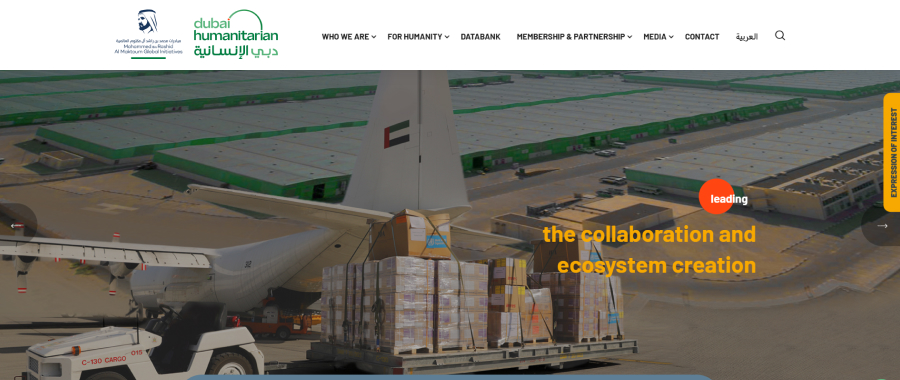
International Humanitarian City was established in 2003 by decree of the Ruler of Dubai and is an officially state-supported project. The zone was established as a global hub for humanitarian organisations, foundations and companies involved in logistics, aid distribution and emergency support. Today, IHC has more than 80 residents, including the UN and major international NGOs. Located close to Jebel Ali Port and Al Maktoum Airport, the complex is integrated into the UAE's largest logistics cluster. This positioning makes it a specialised site providing quick access to global markets and effective interaction between business and the humanitarian sector.
Business Activities Allowed in the International Humanitarian City Free Zone
The International Humanitarian City Free Zone allows activities directly related to the humanitarian and logistics sector. The main activity is storage, distribution and transport of humanitarian goods, medical and food products. Activities of international foundations, NGOs and agencies related to disaster relief are also allowed.
Key examples are distribution of medicines, equipment for rescue operations, logistics and warehousing services, educational and consulting projects in the humanitarian sphere. Certain areas, such as working with pharmaceutical products or specialised equipment, require prior approvals from local authorities.
A unique feature of IHC is the ability to officially combine commercial activities with humanitarian missions, which is not available in other UAE free zones.
Step-by-Step International Humanitarian City Free Zone Company Formation and Registration
Opening a company in International Humanitarian City is a structured but flexible process tailored to the needs of humanitarian organisations and related businesses. In practice, it boils down to three blocks: choosing the legal form and types of activities, necessary approvals, submitting a package of documents with payment of fees, and issuing a licence. Most of the operations are available online: name verification, uploading files, payment, issuance of corporate papers. Below is a list of documents and the procedure for remote registration with typical deadlines and practical tips below.

Required Documents and Timeline
To incorporate a company in the IHC, a standardised package of paperwork is required. It confirms the identity of the founders and ensures compliance with the requirements of the zone.
Basic documents are following:
- Passport copies of all shareholders and directors (photo and signature pages).
- A valid UAE visa or a copy of the entry permit if the applicant is in the country.
- A passport-sized photo.
- Proof of residential address (utility bill or bank statement not older than three months).
- CV or brief description of professional experience for founders and managers.
- Founding documents.
- Business plan or a description of the planned business, especially if it is related to medical products or pharmacy.
Verification and preliminary approval of the company name takes 2-3 working days. Consideration of submitted documents takes up to 5 days. After that, a licence is usually issued and registration papers are issued. With a correctly prepared package, the whole process takes about two weeks.
Remote Registration Option
Company registration in the International Humanitarian City Free Zone is possible entirely remotely, which is especially convenient for foreign investors and international organisations. There is no need to visit Dubai in person: all stages, from choosing a name to obtaining a licence, are carried out through the online portal or with the support of an accredited registration agent.
Once the electronic application package is submitted, the zone's specialists carry out verification, including due diligence. A remote verification format is used to confirm identity: it is usually a video call during which the applicant shows his/her passport and answers a few basic questions. This procedure replaces personal presence in the office.
If an entrepreneur prefers to minimise involvement in technical details, it is possible to entrust the process to an official agent. In this case, the agent interacts with the IHC administration, prepares forms, uploads files and tracks deadlines. The client only needs to electronically sign the necessary documents and confirm payment of state fees.
Such a model saves time and resources, allowing the business to get up and running quickly. For many organisations, this is a critical factor, especially when a company needs to be set up quickly for humanitarian or logistics projects.

Want to learn more about UAE business setup services?
Types of Licenses and Costs in the International Humanitarian City Free Zone
The International Humanitarian City Free Zone provides two types of licences, reflecting the unique focus of this jurisdiction. Commercial licences are intended for companies engaged in logistics, warehousing, distribution, and other business activities that support humanitarian operations. Non-commercial licences are designed for charities, NGOs, and organisations working directly in humanitarian aid and relief projects.
The cost of registration and annual renewal is clearly structured and depends on the chosen package, while the zone maintains a transparent pricing policy with no hidden fees. This flexibility allows both commercial players and non-profit organisations to select the most suitable option for their goals and budgets, ensuring compliance and operational efficiency.
Visa Packages and Pricing Breakdown
International Humanitarian City Free Zone offers a transparent tariff system divided into commercial and non-commercial licences. The total cost depends on the format of the workplace and the scale of the activity.
NPO (non-profit organisations):
- Business Centre Desk - from AED 11,250 per year.
- Standard Office - from AED 18,274 per year.
- Warehouse space - from AED 269 per m².
Commercial (commercial companies):
- Business Centre Desk - from AED 20,800 per year.
- Standard Office - from AED 32,064 per year.
- Warehouse premises - from AED 376 per m².
Resident visas are additionally paid for - on average AED 3,500-5,000 per person (including medical examination and Emirates ID). Activation of e-channel costs around AED 2,500 (one-off). There may also be additional costs for typing centre services and bank letters - approximately AED 1,000-2,000.
This structure allows you to choose the optimal package for specific tasks - from a small office for an NGO to a full-fledged warehouse for international logistics.
International Humanitarian City Free Zone Company Formation: Who Should (and Shouldn’t) Choose This Free Zone?
The International Humanitarian City Free Zone is a specialised platform primarily aimed at humanitarian organisations, foundations and logistics companies. Unlike universal zones, the focus here is on supporting activities related to international aid and emergency response. Below are criteria to help you understand if registering with the IHC is right for you.
Who is eligible:
- International humanitarian organisations and charities.
- Logistics operators handling essential cargo.
- Companies involved in the distribution of medicines, products and equipment for rescue operations.
- Consultants and educational projects related to the humanitarian sector.
Who is not eligible for this free zone:
- Freelancers or self-employed individuals with no connection to humanitarian work.
- Manufacturing companies focused on commercial production.
- Trading structures not linked to humanitarian logistics.
- High-risk nationalities and industries requiring strict authorisations.
Limitations: lack of standard VAT registration, narrow specialisation and need for prior approvals for pharmaceuticals.

Conclusion
The International Humanitarian City Free Zone occupies a special place among the UAE's economic zones, as its mission goes beyond ordinary commerce. The main advantages for residents are its strategic location near Jebel Ali Port and Al Maktoum Airport, government support, simplified registration procedures and the opportunity to work in a unique environment where humanitarian organisations, foundations and logistics companies come together. There is no unnecessary bureaucracy: most processes can be done remotely, saving time and reducing costs.
This zone is optimal for international NGOs, foundations, medical and food suppliers, and logistics operators for whom speed and reliability are critical. However, it is not universal: entrepreneurs looking for a site for purely commercial trade or manufacturing should consider other options. In practice, many companies choose IHC not only for licensing, but also for the networking opportunities it creates inside the humanitarian cluster. The environment here often encourages partnerships, joint initiatives and quicker access to international donors and relief agencies.
The next stage is to discuss the details with specialist consultants: they can help you select a licence package in the IHC, calculate the full costs and speed up the permitting process. Professional support will avoid mistakes and allow to focus on developing projects in the global humanitarian sphere.
Can I register a company in the International Humanitarian City Free Zone without visiting the UAE?
Personal presence is not required. Registration is fully available online: documents are submitted through the portal, identity is confirmed by video call or through an accredited agent. This is convenient for international organisations that need to open a company quickly and without travel costs.
As a standard, licence and lease payments are made in a single payment per year. In some cases it is possible to arrange instalments through accredited partners or consulting companies. This option should be clarified in advance, as the zone administration itself does not always provide instalments directly.
Can I use an International Humanitarian City Free Zone license for trading outside the UAE?
Yes, the licence in the IHC allows international trade and humanitarian supplies outside the UAE. The zone is oriented towards global logistics, so residents can work with foreign funds and partners. However, domestic trade in the mainland Emirates will have to be coordinated separately.
What activities require pre-approval in the International Humanitarian City Free Zone?
Prior approvals are mandatory for pharmaceutical products, medical devices and nutrition and life-saving equipment. These areas require certification and licences from the relevant authorities. Ordinary humanitarian and logistics services generally do not require additional authorisations.
How does International Humanitarian City Free Zone compare to other zones like DMCC or IFZA?

