


 Calen Voss
  30.12.2025
If you run a company in the UAE today, you can’t escape the topic of Emiratisation. It shows up in board meetings, HR discussions, bank compliance requests — even casual conversations between business owners trying to make sense of the latest rules. And it’s not just another government initiative; it’s a legal requirement that directly affects how you hire, plan, and report your workforce.
The challenge for most companies isn’t the idea behind Emiratisation — it’s understanding what exactly applies to them. Which quotas matter? How are fines calculated? Do free zones follow the same rules? What happens if you can’t find a suitable Emirati candidate?
This guide breaks everything down in simple, straight language. You’ll learn what Emiratisation actually means, how the program works, how targets are measured, and what employers must do to stay compliant.
What Is Emiratisation in the UAE?
The UAE's long-term goal is to get more Emirati residents to work in the private sector through Emiratisation. For businesses, it means that depending on your size and industry, you have to follow certain standards for hiring and reporting. The idea isn’t to make life difficult for employers — it’s to make sure local talent has real career paths outside government jobs, and to build a workforce that supports the country’s long-term stability. If you understand the structure, Emiratisation becomes less of a mystery and more of a straightforward compliance requirement.
Emiratisation Meaning and Why It Matters
At its most basic level, Emiratisation means employing and training Emirati nationals to work for your company. It matters because it is now linked to legal duties, yearly growth goals, and fines. But it also matters on a practical level — meeting your Emiratisation rule early helps you avoid fines, keeps you in good standing with MOHRE, and opens doors to incentives under the Emiratisation program, including support from Nafis. For any company planning to grow in the UAE, understanding this foundation is essential.
What Is the Purpose of the Emiratisation Program?
The point of the Emiratisation program isn’t complicated: the UAE wants more Emiratis working in real private-sector jobs, not just government roles. For years, most locals naturally chose government careers because the hours, stability, and benefits were better. The program exists to rebalance that — to make sure the country’s own citizens are part of the companies shaping its economy.
From the employer's point of view, Emiratization gives you clear rules instead of general standards. You know what the quotas are, when they go up, and how hiring people affects your MOHRE compliance grade. The government isn't just making companies pay; it's also helping them through Nafis so they don't have to do everything on their own.
At its heart, Emiratisation is about building a workforce that actually reflects the UAE — and helping employers bring Emirati talent into their teams in a structured, supported way.
Emiratisation Law in the UAE: Key Rules Employers Must Know
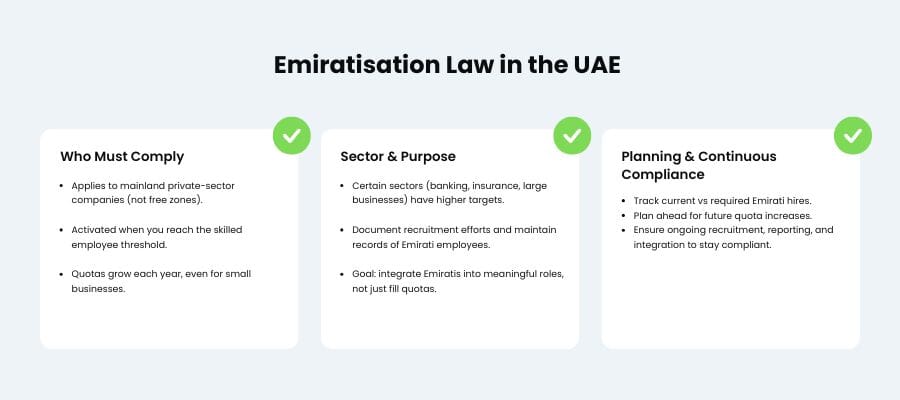
At its core, the Emiratisation law sets the expectations for how companies in the UAE private sector must hire, report, and develop Emirati employees. The rules aren’t random — they follow a structured framework issued by MOHRE, and the obligations grow depending on your company size and activity. Understanding these basics saves you from unpleasant surprises, especially when targets, audits, or fines come into play.
Who Must Comply With Emiratisation Requirements
Most companies outside free zones fall under Emiratisation requirements. If your business is on the mainland and employs skilled workers, you’re expected to meet annual Emiratisation targets. The threshold usually starts when a company reaches a certain number of skilled employees — at that point, your quota becomes active and must grow every year. Even if you're little now, planning ahead can help. A lot of firms only find out they're not following the rules when MOHRE reports them during a licence renewal.
Sector-Specific Obligations in the Private Sector
While the overall Emiratisation rule applies broadly, some sectors face stricter obligations. Because they are so important to the economy, industries including banking, insurance, and big businesses have higher required Emiratisation rates. These companies must hit specific percentages, follow documented recruitment efforts, and maintain detailed records of the Emirati employees they hire.
Each sector has its own rhythm, but the idea stays the same: integrate Emiratis into roles where they can grow, contribute, and build long-term careers — not just fill a checkbox. For employers, knowing your sector’s exact obligations is half the battle.

Want to learn more about UAE business setup services?
Emiratisation in the Private Sector: Quotas, Rules, and Updates
Emiratisation in the private sector basically works like a moving target — clear numbers you must hit, updated deadlines, and annual growth requirements that increase a little every year. Once your company reaches the threshold for skilled employees, the rules switch on automatically. From that point, MOHRE expects steady progress, not last-minute scrambling at the end of the year. The idea is simple: build Emirati talent into your workforce gradually, not as a rushed box-ticking exercise.
Emiratisation Targets and Annual Growth Requirements
The quota most companies talk about is the yearly percentage increase. Private-sector employers with skilled workers must grow their Emirati headcount by a set percentage each year, and MOHRE checks this during licence renewals and periodic audits. It’s not enough to hire one Emirati once — the requirement grows, so your Emiratisation number has to rise with your workforce. Many companies get caught out because they expand quickly but forget the quota rises with them. Planning ahead makes all the difference.
How Emiratisation Affects Recruitment and Workforce Planning
Emiratisation doesn’t just change your hiring — it changes how you hire. Instead of just following the rules for a short time, you should think about roles that are good for local candidates, how much they will be paid, how they will be trained, and how to keep them for a long time. It also means building recruitment cycles that include Emirati talent early instead of after everything else. Companies that treat Emiratisation as part of their workforce planning tend to avoid fines, avoid stress, and actually build stronger teams. Those who leave it to the last minute usually end up paying for it — literally.
Emiratisation Targets and Fines: Penalties for Non-Compliance
With Emiratisation, the targets are not “nice to have” – they’re part of the law, and MOHRE checks them. If your company is supposed to employ a certain number of Emiratis and you don’t, you’re charged a fixed amount for each missing Emirati position, usually on a yearly basis. Miss the target again next year, and the bill doesn’t magically disappear – it adds up.
The money is only part of the pain. Falling behind on Emiratisation can also affect things you actually rely on: work permit approvals, licence renewals, and how your company shows up in MOHRE’s system. Some businesses only realise there’s a problem when a renewal or new quota suddenly stalls.
The easiest way to avoid fines is boring but true: treat Emiratisation like payroll or rent. Plan for it early in the year instead of trying to fix everything in December.
You could think of Emiratisation as "one more rule," but if you examine more closely, you'll realise that it can help you too. Adding Emiratis to your staff gives you personnel who know the local system, language, and expectations better than any training course can.
On the cost side, programs like Nafis can support salaries, training, and onboarding, which takes pressure off your payroll. And when banks, MOHRE, or other authorities see you’re serious about Emiratisation, day-to-day dealings often become smoother and less painful.
An Emiratisation strategy doesn’t have to be deep or dramatic. To begin, think about which roles in your firm an Emirati could accomplish well right now or with minor training. It could be working in HR, admin, or finance, dealing with government websites, or communicating to local clients. Once you map out a few real roles instead of just staring at a percentage, Emiratisation feels less like a quota and more like hiring people who actually fit how business is done in the UAE.
Government Support, Nafis Program, and Incentives
The UAE actually gives you a lot of help if you know where to look. Nafis isn’t just a big national initiative on paper — it offers salary top-ups, training support, and even hiring cost relief for companies that take Emiratisation seriously. These incentives are like a safety net for many HR teams while they find the right jobs and people to fill them. You can also use national talent pools and job platforms to make hiring much less of a guessing game.
Training, Recruitment, and Retention Best Practices
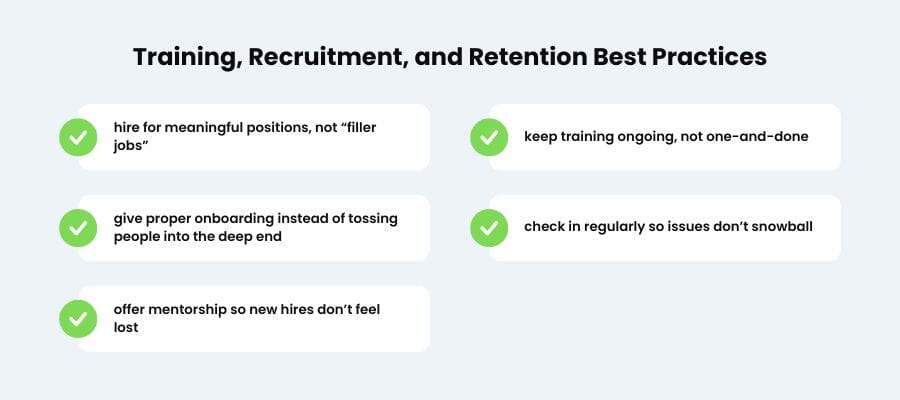
The companies that succeed treat Emirati hires like long-term colleagues, not compliance numbers. They:
- hire for meaningful positions, not “filler jobs”;
- give proper onboarding instead of tossing people into the deep end;
- offer mentorship so new hires don’t feel lost;
- keep training ongoing, not one-and-done;
- check in regularly so issues don’t snowball.
When you do these small things consistently, Emiratisation stops feeling like an obligation — it starts feeling like an investment that pays back.
Conclusion
People will not stop being emirated, and acting like it's just "another rule" will only lead to fines and stress. When you understand how Emiratisation works, choose the right roles, and use support like Nafis, it becomes something you can plan for instead of fear. You get a stronger connection to the market, a healthier standing with MOHRE, and a team that actually reflects Emiratisation in the UAE. If you don’t want to figure it out alone, Consulting.ae can stand next to you, not opposite you.
Who must comply with Emiratisation requirements?
Any mainland company with skilled employees must follow Emiratisation rules. If you hire for qualified roles, you’re in the system — no exceptions. Need help checking your category? Consulting.ae can review it with you.
What are the Emiratisation targets for private sector companies?
Most firms must increase their Emirati workforce by 1% every year until they reach the required quota. It applies only to skilled positions.
What fines apply for failing to meet Emiratisation quotas?
MOHRE issues fixed annual fines per missing Emirati, and they rise if non-compliance continues.
Does Emiratisation apply to free zone companies?

