

 Kristina Markovic
  30.12.2025
Launching an online business in the UAE starts with understanding how the e commerce license Dubai issues actually works, because it’s the document that turns a simple idea into a legal, operational online company. You can open payment channels, run advertising without limitations, make contracts with suppliers, transport things anywhere in the world, and build a brand that people trust once you have it. Dubai is a popular place for entrepreneurs to start businesses since the licensing process is short, the rules are clear, and there are a lot of clients who already live online.
This guide breaks the whole system down into practical steps — the license types, the real costs, the documents, and what happens after approval. You’ll see where a mainland setup makes sense, when a free zone is smarter, and how to structure your online operations from day one. The goal is clarity, not jargon.
What Is an E-Commerce License in Dubai?
Think of an e-commerce license in Dubai as the moment your online idea officially becomes “a real business” in the eyes of the UAE authorities. Nothing dramatic—just a practical document that says: yes, this person can legally sell online here. It includes the normal things like your own website, social media accounts, and marketplace stores. But it also helps you perform the more adult things that come with operating a business, like opening a bank account, connecting to payment gateways, signing appropriate supplier contracts, and running ads without having to go through numerous verifications. You can get it from the Dubai Department of Economy & Tourism if you want a mainland setup, or from one of the UAE free zones if you’re building something more flexible or cost-friendly.
Why Do Businesses Need an ECommerce License in the UAE?
You need it because the UAE doesn’t treat online sales as a hobby – it treats them as real business, with registration and licenses expected. Without that license, payment providers, couriers, and marketplaces will simply say no or keep you in “review” forever. With it, you look like a proper company on paper, and customers can see they’re buying from someone accountable, not just a temporary social media page.
What Are the Main Types of E-Commerce Licenses in the UAE?
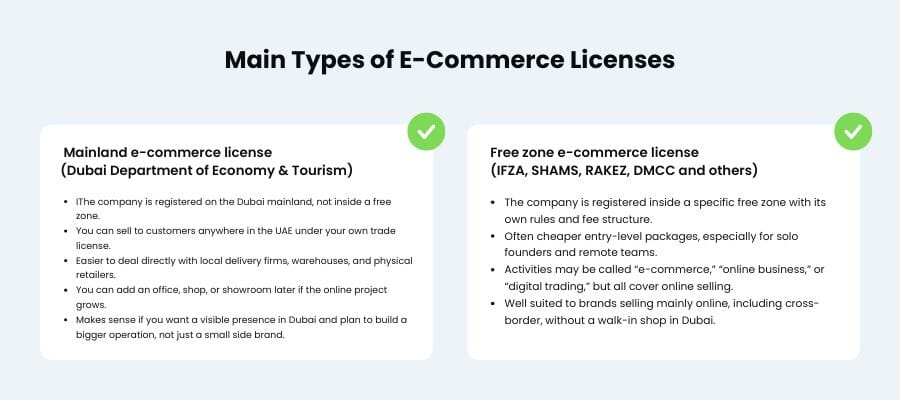
On paper it all looks like “one” e-commerce license, but in reality you choose between two main structures: a Dubai mainland company or a free zone company. The activities are similar, the paperwork is similar, but the way you trade and grow can be quite different, so it’s worth seeing them side by side instead of guessing.
- Mainland e-commerce license (Dubai Department of Economy & Tourism)
- The company is registered on the Dubai mainland, not inside a free zone.
- You can sell to customers anywhere in the UAE under your own trade license.
- Easier to deal directly with local delivery firms, warehouses, and physical retailers.
- You can add an office, shop, or showroom later if the online project grows.
- Makes sense if you want a visible presence in Dubai and plan to build a bigger operation, not just a small side brand.
- Free zone e-commerce license (IFZA, SHAMS, RAKEZ, DMCC and others)
- The company is registered inside a specific free zone with its own rules and fee structure.
- Often cheaper entry-level packages, especially for solo founders and remote teams.
- Activities may be called “e-commerce,” “online business,” or “digital trading,” but all cover online selling.
- Well suited to brands selling mainly online, including cross-border, without a walk-in shop in Dubai.
How to Get an E Commerce License in Dubai Step by Step?
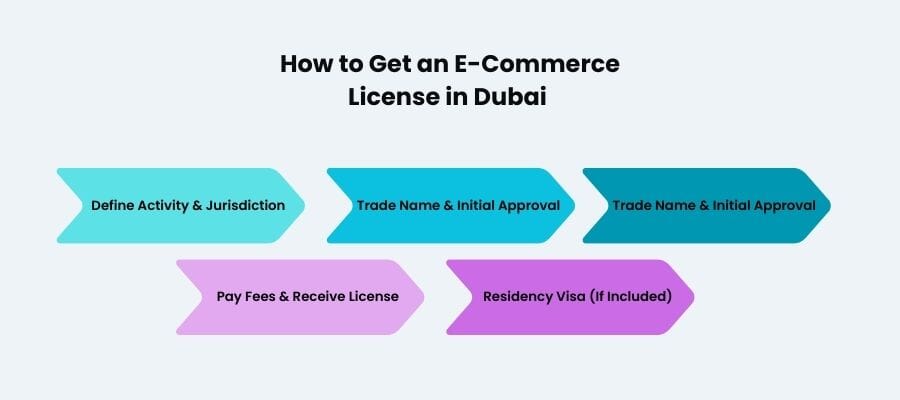
The process looks complicated from a distance, but when you break it down, it’s really a sequence of small, predictable actions. After each step, the next one can be done. It's much less strange once you understand how it all works. The general flow is pretty much the same whether you pick mainland or a free zone: make sure you know what you want to do, pick the building, turn in your papers, and wait for the go-ahead.
Initial Approvals and Trade Name
When you apply, the authority first wants two simple things: what you plan to do and under which name. On the form it appears as “activity” and “trade name,” but in practice it’s just: what are you selling online and how do you want the company to be called. You usually submit a few name options because not all of them pass. No offensive words, no references to government bodies, and the name should broadly match your concept. Once they give a yes to the activity and name, you get an initial approval and can move on to the rest of the paperwork.
Required Documents
The document list isn’t long, which surprises many first-time founders. You usually need your passport, a clean copy of your visa or entry stamp, a passport-style photo, and a simple application form. If you’re applying for a free zone package, they might ask for even less. Mainland setups sometimes include a tenancy contract later in the process, but not at the very beginning.
License Issuance and UAE Residency Visa
Once the authority is satisfied with your file and the fees are paid, they just issue the license—no ceremony—and from that moment your company exists in the system. If you chose an e commerce license Dubai with visa option, you then move into the residency part: entry permit, medical check, fingerprints, Emirates ID. It’s a few appointments and some waiting, but it’s standard procedure, and when you’re done you can live in the UAE, sign contracts in your company name, sponsor staff or family if your quota allows, and speak to banks about opening a proper corporate account.
What Are the Cheapest Options for an E-Commerce License in the UAE?
The cheapest e-commerce installations in the UAE are almost always in free zones, not on the Dubai mainland. These zones make small packages for online retailers. These are for folks who want a business that is legal, a licence, and maybe a visa slot, but not much else. Names you’ll see again and again are IFZA, SHAMS, and RAKEZ, plus others that launch starter bundles.
Prices move every year, so you need a fresh quote, but the logic doesn’t really change: the fewer add-ons you choose—office space, multiple visas, complex ownership—the lower the bill. For a one-person e-commerce project or a small remote team, a simple free zone ecommerce license is often enough to test your idea, collect payments, and build a basic track record before you decide whether to upgrade.

Want to learn more about UAE business setup services?
How to Start an Online Business in the UAE?
Starting an online business in the UAE doesn’t look the same for everyone. One founder will build a full website and brand from day one, another will list products on marketplaces, and someone else will start by selling through Instagram or TikTok. All three options are acceptable here as long as the activity is covered by a proper e-commerce license and the company behind it is registered correctly.
Starting Your Own Marketplace/Website
This route gives you the most control. You choose your branding, design your store, set your own rules, and keep your customer data. It takes more effort upfront—domains, hosting, payment gateways, product pages—but it also builds long-term independence. Many founders pick this path when they want to create something bigger than a side project.
Selling via Existing Marketplaces
If you don't want to deal with a full website on the first day, listing on sites like Amazon.ae or Noon is the easiest way to go. You connect to their traffic, delivery network, and built-in trust. You agree to their restrictions, fees, and the fact that your product is right next to a dozen others that are the same. It's not "your world," but it's a quick and honest method to find out if people really want to buy what you have to sell.
Selling on Social Media
With social-first selling, you can "start now and refine later." It's possible that you also post on Snapchat. You also answer direct messages, send payment links, and ship items one at a time. A lot of people like how close and rough it feels. The only catch: after a while, tracking orders in chats and spreadsheets gets messy, and that’s usually the moment founders realize they need a proper store connected to their ecommerce license in Dubai.
What Are the Best Online Trading Platforms in the UAE?
“Best” depends on how you plan to sell, but a few names come up in almost every UAE e-commerce conversation. For marketplace selling, Amazon.ae and Noon are the main players: huge traffic, structured systems, and clear rules for sellers. If you want to be seen quickly, that's usually where you begin your search.
Most UAE founders choose Shopify or WooCommerce if they want to run their own store. They connect to local payment gateways, work with delivery aggregators, and don’t require a full tech team to maintain. The smart move is simple: pick one main platform, learn it properly, and only then start adding extra sales channels around it.
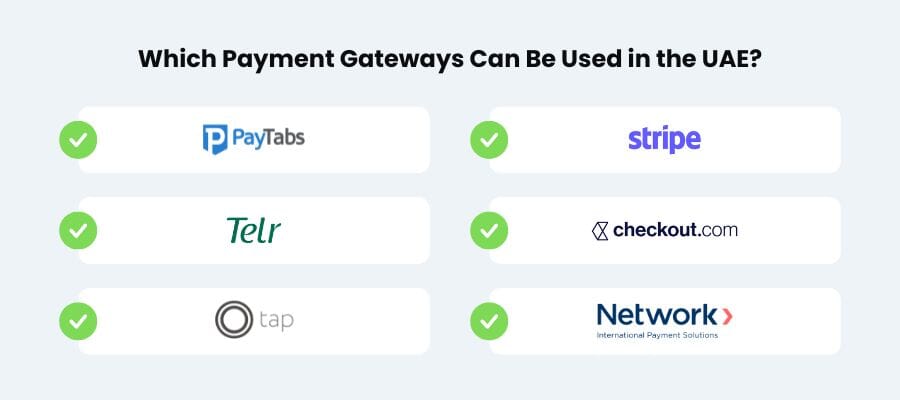
Which Payment Gateways Can Be Used in the UAE?
There are several ways to pay in the UAE, but the hard part is finding one that works for your business. Most e-commerce business owners start with a card gateway and a cash-on-delivery partner. If they need it later, they add Apple Pay or subscription billing. The common names you’ll hear from UAE merchants include:
- PayTabs
- Stripe (supported through local onboarding partners)
- Telr
- Checkout.com
- Tap Payments
- Network International
Some gateways feel friendlier for small, simple stores; others make more sense when you’re processing bigger volumes or selling to several countries. Don’t chase the most “famous” name—pick the one that actually works well with your store setup and pays out on time without surprises.
What Are the Benefits of an ECommerce License in the UAE?
You can see how useful an e-commerce licence is in the UAE as soon as you try to do something useful, like setup a payment gateway, run ads, talk to suppliers, or transport goods. Every door stays half-closed without the licence. It makes businesses and platforms see you as a serious business, not just someone who is trying things out on the side.
Founders usually highlight a few advantages that matter from day one:
- You can legally sell online across the UAE and abroad.
- Banks, payment providers, and logistics partners onboard you without hesitation.
- Your brand gains credibility with customers who expect businesses to be licensed.
- You can hire staff, bring partners on board, and expand into more activities later.
Another quiet but important benefit is stability. Rules are clear, authorities such as the Dubai Department of Economy & Tourism outline what’s allowed, and you don’t have to worry about operating in a grey area. It creates a clean base from which you can focus on building the business instead of navigating uncertainty.
How Consulting.ae Helps You Obtain an E-Commerce License in Dubai
Most business owners can figure out the big picture, but they waste time and money on the little things, like picking the right activity, finding the right free zone, getting the right visa, and meeting banking requirements. That's where Consulting.ae comes in. We don't just look at the licence you believe you need; we also look at what you're trying to build and find the structure that works best for your idea. Some founders need a traditional mainland setup, while others do well with a lean free zone model, and yet others need a mix of the two.
If your package includes visas, we will prepare your documentation, get the permissions, organise the issuance of the licenses, and help you through the residency process. You won't have to guess what follows next or follow imprecise directions.
If you’re unsure which e-commerce license in the UAE makes sense for you, reach out to Consulting.ae and we’ll walk you through the options step by step. Our job is to help you launch quickly, legally, and without paying for things you don’t need.
How to start an e-commerce business in the UAE?
Start with the boring but crucial decision: mainland or free zone. Then apply for an ecommerce license, register your trade name, and get the license issued. Only after that worry about the website, payment gateway, and delivery partners.
Which free zone is best for an ecommerce license?
There’s no single champion. IFZA, SHAMS, RAKEZ, and DMCC all have solid, clear packages for ecommerce license holders. The “best” one depends on how many visas you need, your budget, and whether your buyers sit mostly in the UAE or abroad.
How can I get an e commerce license in Dubai?
You apply either through the Dubai Department of Economy & Tourism for mainland or a free zone if you want something lighter. Choose the activity, pick a name, upload documents, pay the fees, and wait for approval. Once the ecommerce license Dubai issues is active, you can move on to visas and banking.
What documents are required for an e-commerce license?

