


 Mohammed Khalil Al Qasim
  20.02.2026
A physical office presence in the UAE is not a decorative extra. In practice, it plays a central role in banking approval, visa eligibility, and tax compliance. Flexible desks and virtual offices do exist on paper, but real-world checks tend to look past marketing labels. What actually matters is where the business operates, how visible it is, and whether that location can stand up to scrutiny. The requirement depends on jurisdiction, business activity, and compliance reviews—not on what sounds convenient at setup.
Why Banks Expect a Physical Office Presence
Banks assess physical presence as part of basic risk management. A company that operates from a verifiable location is easier to monitor, inspect, and understand. From a compliance point of view, a real office signals operational substance rather than a shell arrangement.
For a business bank account UAE office review, banks focus on whether the business can demonstrate continuity. A lease-backed address helps them confirm where records are kept, where management decisions happen, and how clients interact with the company. This expectation is tied to AML controls and internal audit standards rather than to formal licensing rules.
How Banks Verify Office Presence in Practice
Verification is usually practical, not theoretical. Banks may request:
- A registered lease agreement
- A valid Ejari registration (which answers the question of how to register Ejari for mainland premises)
- Photos of the office or signage
- Confirmation during compliance calls or follow-up reviews
These checks may occur at account opening or later. Some banks re-verify every 12 to 24 months, especially if transaction patterns change.
Physical Office Requirements for Visas and Residency
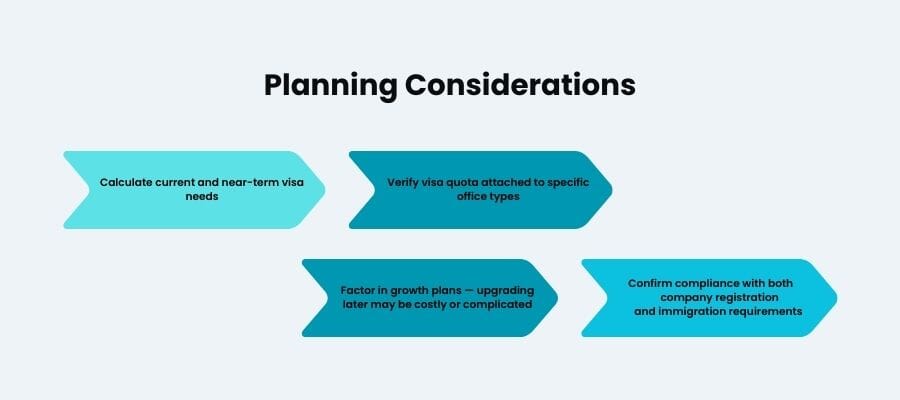
Office space isn’t just “nice to have” — it hits visa eligibility directly. Immigration quotas are tied to what premises you’ve registered and what kind of space it is. If your setup isn’t compliant, sponsoring staff (or even certain investors) can turn into a messy back-and-forth.
In a lot of free zones, a flexi-desk package typically covers 1–3 visas. Want more? You usually need a bigger office. On the mainland, the square-meter link is often stricter, so physical office presence in the UAE becomes a real planning decision, not a box you tick.

Want to learn more about UAE business setup services?
Office Presence and Tax Compliance in the UAE
Tax compliance looks beyond registration certificates. Authorities assess where management decisions are made and where operations actually occur. This approach reflects how tax oversight bodies such as the Federal Tax Authority evaluate operational reality during audits, focusing on where control and activity genuinely sit. A physical office helps demonstrate that substance.
This becomes particularly relevant under economic substance UAE expectations. Even when a business is not subject to full substance reporting, having an office supports the narrative that control and activity are genuinely located in the UAE. This approach aligns with how bodies such as the Federal Tax Authority evaluate operational reality during audits.
Want to learn more about UAE business setup services?
Mainland vs Free Zone: Practical Differences in Office Requirements
At registration, free zones usually give more breathing room. Flexi-desks and shared spaces are commonly accepted. On the mainland, you’re typically expected to have a leased office from day one, and it’s registered through Ejari.
Over time, though, the story shifts. Physical office presence in the UAE starts to matter in the same way across both routes. Banks, tax authorities, and business partners often judge substance similarly, so office requirements mainland vs free zone can feel much closer after the first year—especially once the company grows.
Why Virtual Offices and Flexi-Desks Often Create Issues
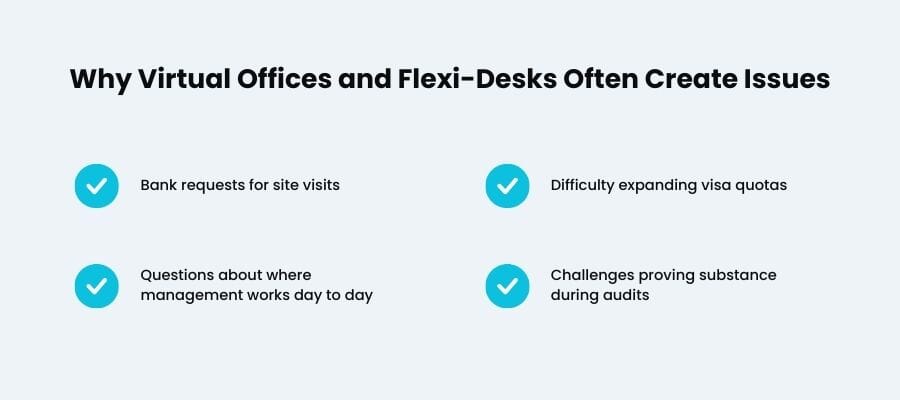
Virtual offices and minimal desks are not illegal. The issue is durability. They often pass initial checks but struggle under deeper reviews.
Common friction points include:
- Bank requests for site visits
- Questions about where management works day to day
- Difficulty expanding visa quotas
- Challenges proving substance during audits
Many free zones officially support flexi-desks, but long-term operations tend to outgrow them. When compliance questions appear, upgrading the office becomes unavoidable.
Conclusion
In practice, a physical office is less about walls and more about credibility. It anchors banking relationships, supports visas, and strengthens tax compliance. Flexible options can work at the beginning, but they rarely satisfy long-term expectations. Understanding how physical presence is assessed helps businesses avoid surprises later.

