


 Manish Kulkarni
  20.02.2026
 Restructuring, selling, or closing a company in the UAE is generally possible and far more structured than it was a decade ago. That said, it is not instant, informal, or casual. Each option follows a defined legal path, and the level of difficulty depends on what the company looks like at the moment a decision is made. Clean records, compliant filings, and realistic timing expectations matter more than optimism. For owners asking how to change business plans in the UAE, the short answer is that the system allows it—but only if the rules are respected.
Restructuring a Company in the UAE
Restructuring a company in the UAE is a common response to change. Businesses restructure when markets shift, partners exit, costs need tightening, or operations need refocusing. The law supports this kind of adjustment, but it expects structure, paperwork, and alignment with regulators.
In practice, restructuring a company in the UAE may involve changing shareholders, directors, activities, internal financing, or asset ownership. None of these moves are unusual. What matters is that changes are documented properly and reflected across licenses, registers, and tax records. Informal changes inside the company that are not mirrored on paper tend to surface later, usually at the worst possible moment.
Legal and Tax Considerations for Restructuring
From a legal point of view, restructuring often touches ownership and control. That means corporate approvals, amended constitutional documents, and notifications to the licensing authority. From a tax angle, the picture has become sharper since the introduction of corporate tax.
Business Restructuring Relief can apply in specific scenarios, particularly where assets or shares are transferred as part of a qualifying reorganisation. These conditions are assessed in line with guidance issued by bodies such as the Federal Tax Authority, which focuses on substance rather than labels.
This relief is not automatic. It applies only if defined conditions are met, including continuity of ownership and genuine commercial reasons for the restructure. Restructuring is rarely “hard,” but it is rarely fast. Expect weeks rather than days, especially if multiple authorities or approvals are involved.

Want to learn more about UAE business setup services?
Selling Shares in the UAE
Selling shares is one of the most common business exit options UAE offers. It allows founders or investors to step back without shutting the business down. In practice, a share sale is treated as a controlled change of ownership, not a private handshake.
Any transfer of shares requires formal approval and updates to the company’s records. The licensing authority must register the new ownership, and banks usually require their own review before recognising the new shareholder. This is where timing often stretches. Even clean deals can slow down if documentation is incomplete or if the buyer’s background checks take longer than expected.
Selling shares isn’t the same thing as disappearing. If the ownership change isn’t correctly filed, the old owner can still be treated as connected to the business, and that’s when late-stage debt or dispute issues can land at their door. This is why company changes after registration in the UAE must always be reflected formally, even when all parties agree privately.
Liquidation sits at the “full stop” end of the options. It isn’t a fast escape hatch. It’s a regulated wrap-up designed to close the business properly. Letting a license just run out can look tempting, but it often leaves a trail—fines, visa/immigration snags, and complications when you try to register something new later.
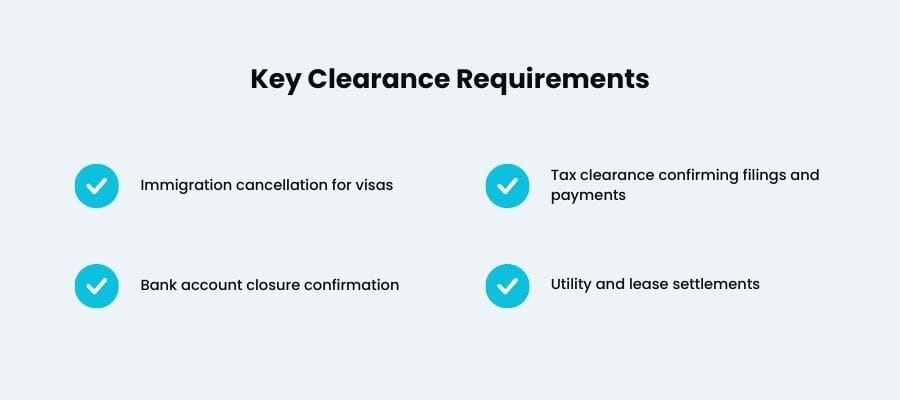
Key Clearance Requirements During Liquidation
Liquidation isn’t a “close and forget” button. It works when the loose ends are dealt with, and the authorities typically require proof the company has settled matters before striking it off the register.
Typical clearances include:
- Immigration cancellation for visas
- Tax clearance confirming filings and payments
- Bank account closure confirmation
- Utility and lease settlements
For most companies, the liquidation timeline ranges from 3 to 6 months, depending on how quickly clearances are obtained. Delays usually come from missing filings or unresolved bank matters, not from the liquidation process itself.
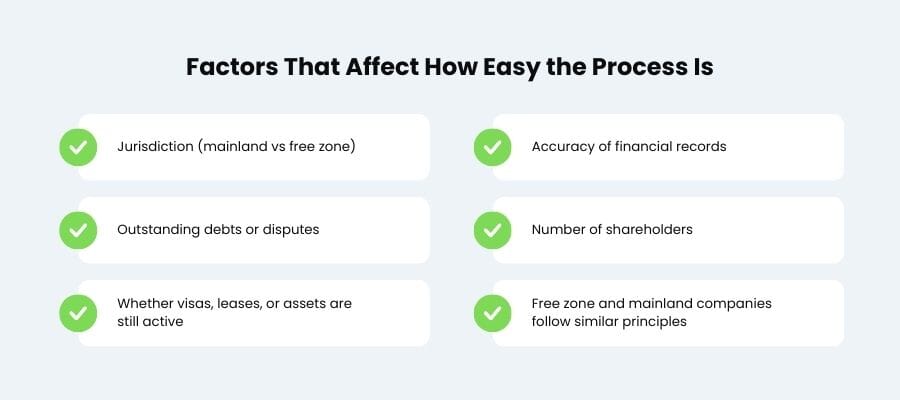
Factors That Affect How Easy the Process Is
No two exits look the same. The ease of restructuring, sale, or closure depends less on intent and more on condition.
Key factors include:
- Jurisdiction (mainland vs free zone)
- Accuracy of financial records
- Outstanding debts or disputes
- Number of shareholders
- Whether visas, leases, or assets are still active
Free zone and mainland companies follow similar principles, but timelines can differ. Some free zones move faster on internal approvals. Mainland processes may involve more external coordination. Neither route is inherently easier; they are simply different.
One point is consistent across all scenarios: the cleaner the company’s records, the easier every option becomes. Businesses that delay filings or ignore minor issues often find that those issues grow when change becomes necessary.
Conclusion
The UAE offers structured, workable paths to restructure, sell, or close a company. These options are more accessible and predictable than they once were, but they are not informal. For owners thinking about how to change business plans in the UAE, the real question is not whether change is allowed, but how prepared the company is to handle it. Planning, accuracy, and timely action usually make the difference between a controlled transition and a stressful one.


