


 Kristina Markovic
  20.02.2026
 Company registration in the UAE is open all year. There is no “closed season,” no magic month, no legal window that suddenly unlocks opportunity. But timing still matters—just not in the way most people expect. The real impact shows up in compliance deadlines, operational readiness, and administrative pressure, not in whether registration is allowed. For founders asking about the best time to register a company in the UAE, the smarter question is how registration timing fits with what happens next.
How the Registration Date Should Align With the Planned Start of Operations
The registration date should make sense when read next to the day the business actually starts doing things. That sounds obvious, but it’s often ignored.
In practice, incorporation is the opening move, not the finish line. Registration doesn’t end the process. It usually leads into banking and visa work, contract prep, reporting obligations, and the internal setup that keeps the business compliant. Registering too early can create idle periods where obligations exist but operations do not. Registering too late can compress everything into a stressful rush.
This is where company registration timing in the UAE becomes a planning exercise. Founders often work backwards from the intended launch: when clients are expected, when staff arrive, when payments start moving. That sequencing matters more than picking a “good” month.
Early planning is especially relevant for regulated or semi-regulated activities, where operational steps may stack up quickly. Registration that looks well-timed on paper can feel badly timed once the downstream tasks pile in.
Financial Year Alignment and Early-Year Registration
Registering early in the calendar year often simplifies life. Accounting periods, reporting cycles, and internal tracking tend to line up more cleanly when everything starts close to January.
Late-year registration isn’t a “wrong choice” by default. Some companies incorporated mid-year may be able to run a first financial period longer than 12 months, taking the edge off immediate year-end reporting. Still, company registration timing in the UAE doesn’t cancel deadlines—you still need clean structure and timely filings.
Tax and reporting expectations are increasingly tied to when a company is active, not just when it exists on paper. This is why founders thinking about when to start a business in the UAE should look at reporting alignment, not just registration speed. The rules are formal, but the pressure is practical.

This approach reflects how bodies such as the Federal Tax Authority view reporting reality: substance and activity tend to matter more than the calendar date alone.
High-Demand Periods and Practical Processing Delays
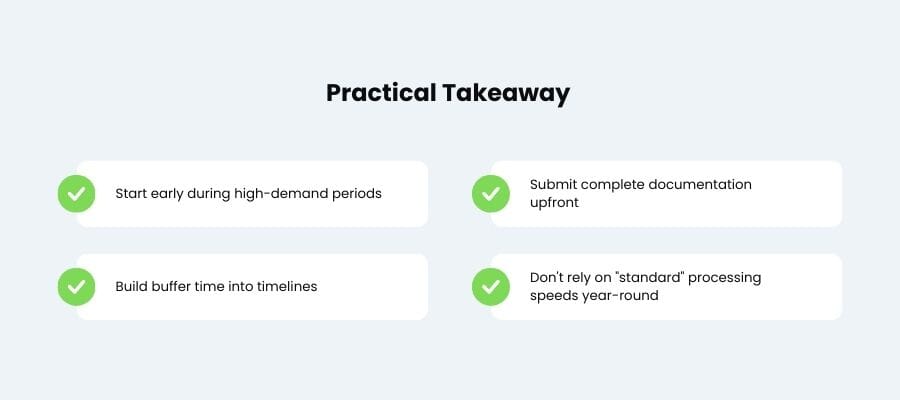
Processing speed can vary. Not dramatically, and not predictably—but enough to be noticed.
During periods of higher demand, approvals and document handling may take longer simply because more files are moving at once. This is not a rule, and it’s not tied to a single authority or a fixed season. It’s administrative rhythm.
Seasonal factors like summer schedules or Ramadan can change working hours and internal pacing. They don’t stop registration, and they don’t create legal disadvantages. They can, however, affect how quickly follow-up steps move, especially if preparation is incomplete.
What matters here is expectation management. UAE company registration deadlines are usually fixed, but the effort required to meet them can feel heavier when everything lands at once.
When Preparation Matters More Than Timing
This is the quiet truth: preparation usually outweighs timing.
A well-prepared registration in a “busy” period often moves more smoothly than a poorly prepared one in a “quiet” month. Clarity of business activity, ready documentation, and realistic sequencing reduce friction far more than calendar choices.
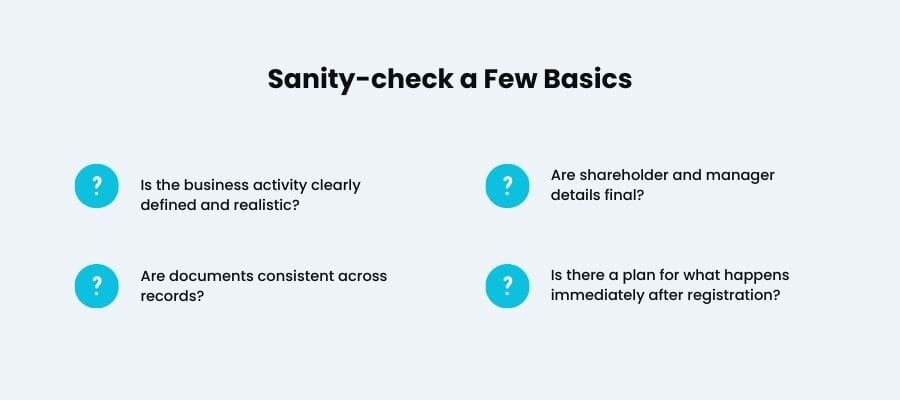
In the first half of the process, founders should sanity-check a few basics:
- Is the business activity clearly defined and realistic?
- Are shareholder and manager details final?
- Are documents consistent across records?
- Is there a plan for what happens immediately after registration?
When these answers are vague, timing becomes a scapegoat. When they’re clear, timing becomes flexible. This is why chasing the best time to register a company in the UAE without preparation often backfires.
Conclusion
You can register a company in the UAE at almost any point in the year. The law allows it. What changes with timing is not eligibility, but pressure. Alignment with operations, reporting cycles, and readiness shapes how smooth—or stressful—the first months feel. For founders thinking seriously about company registration timing in the UAE, the calendar matters less than the sequence.


